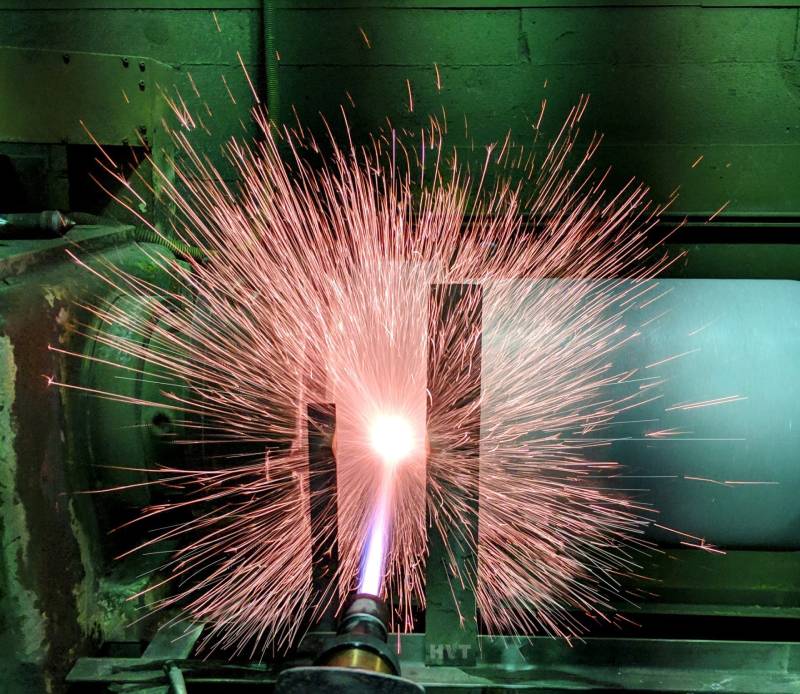
How does HVOF coating work?
High Velocity Oxygen Fuel (HVOF) coating, also known as HVOF metal spray, is a thermal spray coating process used to improve or restore a component’s surface.
Developed in the 1980s as a subset of thermal spraying, HVOF spraying works by mixing of liquid fuel and oxygen, which are injected into a combustion chamber and ignited. The resulting gas reaches extremely high temperatures and pressures before being ejected through a nozzle at supersonic speeds.
The HVOF process creates an ultra-dense, tightly bonded coating that provides exceptional protection against wear, corrosion, and extreme conditions. This makes it ideal for applications that require superior protection against abrasion and corrosion, as well as high-temperature environments.
HVOF has applications in various industries, including:
- Oil and Gas: Protection against harsh chemical environments.
- Industrial: Enhancing wear resistance in manufacturing equipment.
- Mining: Reducing equipment wear in high-friction conditions.
- Machinery: Increasing the lifespan and reliability of critical components.
- Automotive: Improving fuel efficiency and performance in high-stress parts.
High Velocity Oxygen Fuel coatings play a critical role in these sectors by providing superior surface protection and extending the lifespan of essential components. Common components that benefit from HVOF coating include pump shafts, ground engagement tools (GETs), hydraulic cylinders, compressor rods, and engine components.
What are the benefits of using HVOF coating?
Exceptional hardness and wear resistance
HVOF coatings are valued for their exceptional hardness, making them an ideal solution for industries where components face extreme wear and tear. They provide superior wear resistance with a harder, tougher coating and minimal carbide degradation.
Versatile material options
HVOF coatings can be tailored to meet specific requirements by selecting from various materials. Whether it’s ceramics, metals, or carbides, these coatings can be customised to suit the needs of different applications, making them incredibly versatile. They can also be applied to a variety of substrates, including steel, stainless steel, aluminium, titanium, nickel-based alloys, ceramics or plastics.
Superior bond strength
The HVOF process results in coatings with superior bond strength, ensuring that they adhere firmly to the substrate material. This high bond strength not only enhances the durability of components but also contributes to improved performance overall.
Reduced downtime and maintenance costs
By extending the lifespan of critical components, HVOF metal spray coatings help reduce downtime and maintenance costs, ensuring long-term reliability and efficiency. In industries such as oil and gas, mining, and manufacturing, this means fewer equipment failures, reduced operational disruptions, and lower repair expenses. The enhanced durability of HVOF-coated components translates into significant cost savings over time, allowing businesses to allocate resources more efficiently and improve overall productivity.
Enhanced performance
With the combined benefits of hardness, wear resistance, and bond strength, HVOF-coated components consistently deliver enhanced performance. Whether it’s increased efficiency in industrial machinery or improved fuel economy in automotive applications, these coatings elevate performance to new heights.
HVOF spraying process
The HVOF spraying process involves several steps, each crucial to achieving a high-quality coating. Proper execution of each stage ensures that the final coating is durable, well-adhered, and resistant to wear and corrosion. Careful execution at each stage ensures a high-performance, durable HVOF coating for demanding industrial applications.
- Surface preparation: The substrate surface is prepared by cleaning, grit blasting, and/or roughening to provide a good surface for adhesion of the coating.
- Feeding of the feedstock: The feedstock is fed into the HVOF spray gun, where it is heated and propelled towards the substrate surface using a mixture of fuel gas and oxygen.
- Coating deposition: The heated and accelerated feedstock particles impact the substrate surface, where they melt and solidify, forming a dense and well-bonded coating.
- Surface finishing: Once cooled, the coating is ground and polished, ensuring an even and high-quality finish.
How can we help?
High Velocity Technologies has a combined 70 years of experience working with various industries delivering quality HVOF coating and HVOF metal spray solutions. HVT’s HVOF spray services result in a coating that is much harder-wearing than other industry standard options. This means a longer life cycle for your components and less downtime for your machinery.
To find out more about how HVT’s HVOF technology can help your business avoid productivity loss due to equipment downtime, get in touch today.